

Improves
co-morbidities
Gastric bypass surgery has demonstrated efficacy in alleviating and, in numerous instances, resolving obesity-associated comorbidities, including type 2 diabetes, hypertension, osteoarthritis, obstructive sleep apnea, and others.

Weight loss
noticeable and sustained
Gastric bypass surgery typically leads to substantial weight reduction within the initial 12 to 18 months, facilitating patients’ attainment and long-term maintenance of a healthy weight.

Enhanced
quality of life
Patients frequently experience enhancements in mobility, energy levels, and emotional well-being, enabling them to engage in a more active and purposeful lifestyle.


Highest standards
in medical care
We adhere to strict medical protocols and international quality standards. Every detail of our facility is designed to ensure your safety, comfort, and overall well-being throughout your entire treatment.

Extensive experience
and quality care
Tijuana is home to renowned bariatric surgeons with extensive experience. Patients can expect personalized, top-quality care backed by years of surgical expertise and commitment to long-term success.

Cost-Effectiveness
Choosing Tijuana for gastric bypass surgery is an affordable option that doesn’t compromise on quality. Medical services in Tijuana meet international standards, ensuring excellent care at a fraction of the cost.

We take care of
your mental health
Weight loss surgery can be life-changing, and our psychologists will be by your side, offering support at every stage of this transformative journey, so you can face this changes with confidence.

We offer
specialized nutrition
You will get a custom nutritional plan from our expert nutritionists, with recipes and easy-to-follow advice to help you build healthy habits that will keep the weight off for good.

Expert physical
training
Our professional fitness coaches will create a workout plan to support your weight loss, while also keeping in mind the special considerations for bariatric patients.


How is gastric bypass surgery performed?
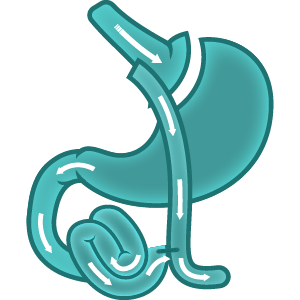
Gastric bypass surgery, also known as Roux-en-Y, consists of a twofold method for weight reduction. The surgeon reduces the patient’s stomach and connects it to a distal part of the intestine.
A smaller stomach can hold less food and that which is consumed does not pass through the first part of the small intestine, resulting in reduced calorie absorption.
In other words, this surgical procedure creates two different mechanisms that enable weight loss: the reduction of the stomach’s size plus a shortcut passage for the digestive system through the smaller intestine.
In this sense, the Roux-en-Y is a restrictive and malabsorptive procedure, since it restricts food intake and also modifies the absorptive capacity of the digestive system.
During the first part of the procedure, Dr. Pompa will divide the stomach into two portions using laparoscopic technology. Once the smaller pouch is created, it will be connected to the lower part of the small intestine (jejunum).
This small pouch will be able to hold about one cup of food at a time, allowing the patient to feel full faster; the food will then travel into the intestine, preventing the absorption of sugars and fats in its first sections, and nutrients will mix in the lower intestine where the second connection is made.
By creating a smaller stomach that bypasses the duodenum, food is redirected directly into the lower part of the small intestine; much of the food will not be processed, which restricts the absorption of calories and nutrients.
What is the recovery time for the gastric bypass?
Recovery for this type of intervention is relatively fast. Patients can expect a 2-day post-operative stay in the hospital’s recovery room. Rest after surgery is mandatory, and most patients return to their daily life routine after 1 month. During this time, patients have to follow a very specific and strict diet that goes through different phases, starting from an only liquids diet, transiting to pureed foods, then to soft solids, and so on, with a progressive increase in calories.
A Roux-en-Y usually achieves more drastic weight loss than a sleeve gastrectomy because it combines a restrictive and a malabsorptive intervention. With a Roux-en-Y, patients start experiencing weight loss as soon as 1 week after surgery, and they can expect to lose more than 70% of their excess weight during their first post-operation year.
Excess weight represents the difference between a person’s ideal weight and his or her initial weight before surgery. According to the latest IFCO report, people who undergo a gastric bypass usually lose between 60 and 80% of their excess weight one year after surgery. The total weight lost with this procedure will depend on many factors.
One of them is the genetic and biological nature of each patient, as not everyone will react the same to the malabsorptive properties of the procedure. Another very important factor is the compromise the patient maintains with a healthy diet and lifestyle, and their amount of physical activity.
One of the most effective types of bariatric treatment available at LIMARP International Center of Excellence for Obesity in Tijuana, MX, is gastric bypass surgery. This procedure not only changes the size of the stomach but also changes how your digestive system absorbs food. It can produce significant results for patients suffering from chronic diseases such as diabetes.
Who is a candidate for gastric bypass surgery?
This surgery is ideal for patients who have at least three or four metabolic conditions and a BMI higher than 40. The Roux-en-Y gastric bypass can highly benefit patients with morbid obesity who suffer from conditions such as diabetes, sleep apnea, and hypertension, since this procedure has shown to have a great impact on ameliorating their symptoms and, in some cases, it can lead to their total resolution.
Patients interested in undergoing a gastric bypass should be aware of the possible outcomes and benefits of this surgery, and they should also take notice that these benefits are not accomplished by themselves. To avoid any weight regain, and to obtain the best possible results that this procedure has to offer, a Roux-en-Y gastric bypass candidate must be willing to commit to drastically changing his or her eating habits and to engage with simple routine exercises.
Don’t worry, at LIMARP, we are committed to your goals just as you are. Our comprehensive treatments include education, guidance, and continuous follow-up provided by our bariatric nutritionist, psychologist, and fitness expert.
Are there any risks involved?
For reasons that can range from the very anatomy of the procedure to lack of proper supplementation or failure to follow post-surgical instructions, patients who undergo gastric bypass surgery may develop:
• Nutritional and vitamin deficiencies.
• Stomach stretching caused by overeating.
• Stomal stenosis (a narrowing between the stomach and small intestines).
• Gallstones.
• Dumping syndrome (when a high-sugar food digests too quickly from the stomach to the small intestine and causes an increase in insulin production, which results in a sudden drop in glucose levels).
• Prolonged digestive issues, such as nausea, diarrhea, or constipation
However, complications due to this procedure are very rare, and it‘s mortality rate is less than 0.2%. Working with qualified healthcare providers and following their instructions can greatly reduce these risks.
The most frequent long-term risk for this procedure is the development of nutritional and vitamin deficiencies, especially vitamin B12 deficiency. This can be very easily prevented, since bariatric surgeons and nutritionists prescribe dietary supplements and vitamins to weight loss surgery patients as part of their treatment, before and after surgery. Weight loss surgery candidates should be well aware that they might need dietary supplements and vitamins as a lifelong habit.
Due to the malabsorptive properties of gastric bypass surgery, there is the possibility of developing intolerance or higher sensitivity to certain foods. Patients should acknowledge that their bodies have been through a major change and that, with it, their reactions to some meals might change too.
For example, some studies report a higher intolerance to alcoholic beverages or a mild risk of developing alcohol dependency. As part of their new and healthier lifestyle, bariatric patients should avoid alcohol, sweets, and fats, and prefer high-protein meals and nourishing treats.
What are the benefits of gastric bypass surgery?
At LIMARP® in Tijuana, we have performed thousands of successful weight loss surgeries on patients all over the world. We use the latest technology and offer specially developed amenities to deliver safe and effective care.
The Roux-en-Y has proven to be effective in ameliorating and even resolving obesity-related comorbidities such as type 2 diabetes, hypertension, osteoarthritis, dyslipidemia, obstructive sleep apnea, asthma, varicose veins, and even infertility.
Choosing to improve your health with gastric bypass surgery can provide many benefits, including:
• Remission of type 2 diabetes.
• Relief from joint pain.
• Resolution of sleep apnea.
• Reduction in the risks related to hypertension and heart disease.
• Healthier lifestyle.
• Better quality of life.
• Dramatic, long-term weight loss.
• Enhanced self-confidence.
A Roux-en-Y bypass might be reversible if the patient faces long-term complications, although a reversal also implies risks as any surgical procedure would.
The results and benefits obtained from this surgery will depend on many factors, including compliance with medical and nutritional instructions, maintenance of a healthy lifestyle, and even genetic predisposition. But when you receive treatment with LIMARP’s expert team, you are not alone.
We provide long-term and lifetime follow-up, monitoring your progress, supervising your biometric levels, and offering guidance and counseling according to your specific needs. At LIMARP, our main focus is your health and lasting well-being, and our commitment is to help you reach your goals, because we take them as seriously as you do.
Is gastric bypass surgery in Tijuana, Mexico, safe?
The outcomes and benefits of this surgery will depend on many factors, including compliance with prescriptions, medical and nutritionist recommendations, maintenance of a healthy lifestyle, and even genetic predisposition.
But when you get treatment with LIMARP’s expert team, you are not alone. We provide long-term to lifelong follow-up, where we monitor your progress, supervise your biometric records, and provide guidance and counseling according to your specific needs. At LIMARP, our main focus is your health and your long-lasting well-being, and our commitment is to help you reach your goals because we take them as seriously as you do.
Tijuana, Mexico, stands out as a top destination for gastric bypass surgery due to its combination of skilled surgeons, modern medical facilities, comprehensive care, and affordable prices. The proximity to the U.S., coupled with the high standards of medical practice, makes it an ideal choice for those seeking effective and safe weight-loss surgery.
What is gastric bypass surgery?
Gastric bypass surgery, also known as Roux-en-Y, is a weight-loss procedure that uses a dual approach. The surgeon creates a smaller stomach pouch and connects it to a lower section of the small intestine. With a smaller stomach, patients can eat less, and because food bypasses the first portion of the small intestine, fewer calories are absorbed. In other words, this surgery works in two ways: it restricts how much food the stomach can hold and it shortens the digestive pathway to reduce calorie absorption. That’s why gastric bypass is considered both a restrictive and a malabsorptive procedure.
Gastric bypass is the second most common bariatric surgery worldwide, after the gastric sleeve. According to the latest global registry from the International Federation for the Surgery of Obesity and Metabolic Disorders (IFSO), about 31% of all weight-loss surgeries performed worldwide are gastric bypass procedures. Most of them are now done laparoscopically. In fact, open gastric bypass surgeries have become very rare and are generally considered unnecessary, thanks to the significant advancements in laparoscopic techniques and medical training.
What to expect on the day of gastric bypass surgery?
Before your procedure, Dr. Pompa and her multidisciplinary team will give you a set of preoperative instructions you’ll need to follow carefully, including a strict diet designed to prepare your body for surgery.
It’s very important that you do not eat or drink anything on the morning of your procedure, unless your doctor instructs you to take specific medication before arriving at LIMARP. Once you check in at our surgical center, you’ll be taken to a private room where you’ll meet with your surgical team. They’ll answer any last-minute questions and provide you with a hospital gown, head and foot covers, and compression stockings.
International patients will undergo preoperative testing. If needed, our anesthesiologist may give you an oral sedative prior to the anesthesia to help you relax. After that, you’ll be taken to the operating room and placed under general anesthesia. Once you are comfortably asleep, Dr. Pompa will begin your procedure.